Beaumont, CA · Garage Door Service
Openers and Power Outages: What Beaumont's Housing Stock Means for Your Door
Beaumont homes built 1968-2000 run original opener wiring into today's heat loads and power outages. Here's what actually fails first and what to check before you call.
- Repairs & new doors
- Springs & openers
- Serving 5 nearby communities
What the Weather Here Does to It
Beaumont sits in a moderate heat band, not desert-extreme, but that's still enough to matter over a few decades. A steel garage door panel sitting in full sun all afternoon gets hot enough to expand unevenly, and if the track isn't dead square, that expansion is what turns a quiet door into one that grinds or binds at the same spot every time. The bigger issue is the opener itself. Most of the housing stock around here went up between 1968 and 2000, with the bulk from the 1980s and 90s, which means a lot of openers are either original units or first replacements from that era. Those motors and circuit boards weren't built with today's heat cycling in mind - they run, cool, run again, all summer, and the capacitors and relay contacts take the wear. You won't see it coming as a dramatic failure. It shows up as a hesitation before the motor engages, or a door that reverses for no clear reason on the hottest part of the day. That's heat fatigue on old electronics, not a mystery.
The Problem
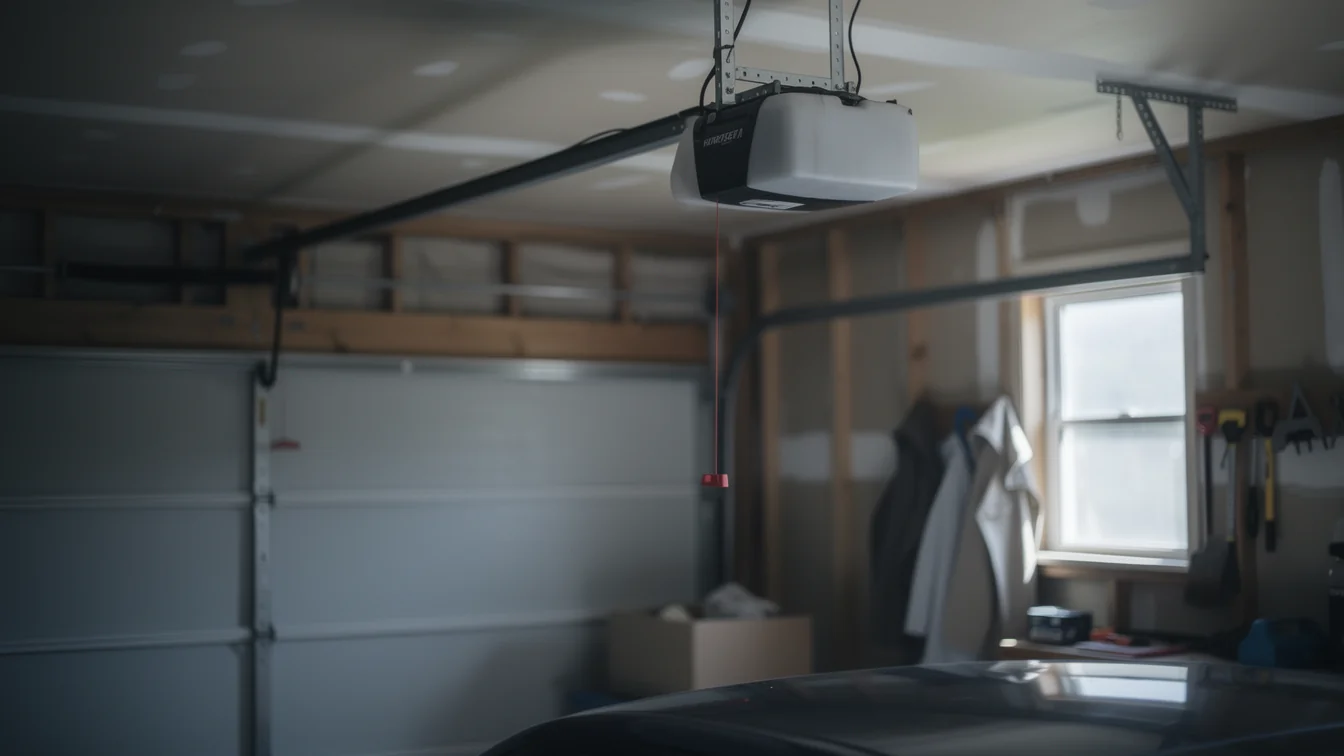
Here's the part that actually catches people: a power outage on a hot day doesn't just stop the opener, it can trap the door in whatever position it was in. Across this service area there are roughly 63,284 households and about 36,284 owner-occupied houses, a lot of them built before battery backup was ever standard equipment on an opener. If your unit predates that feature and the grid blinks during a heat-driven demand spike, you're pulling the manual release cord and lifting the door by hand - which is fine once, and a problem if the springs underneath are also past their working life. The two issues compound. A house from the 1980s or 90s with its original opener and original springs is carrying two components that have both been running on borrowed time, and heat exposure doesn't pick which one fails first. Sometimes it's the opener board. Sometimes it's a spring that finally lets go under the strain of a motor that's working harder than it used to.
When to Get Help
Call before the door fails completely, not after. If the opener hesitates, clicks without moving, or reverses partway on warm afternoons, that's the circuit board or capacitor telling you it's near the end, and it's cheaper to replace the unit on your schedule than on its own. If a power outage leaves the door stuck and you can't get it open with the manual release, stop pulling on it - that usually means something mechanical, not electrical, and forcing it risks a spring or cable. Given the age of a lot of openers out there from the 1968-2000 building years, a unit that's acting up is often original or close to it, which is well past the point where a repair buys you much time. One honest limit here: we don't carry parts for every obsolete opener board from that era, and if yours is one of them, replacement is usually the faster and cheaper path anyway.
What to Look At First
Before you call anyone, check three things. First, the breaker - a tripped breaker after a heat-driven outage looks identical to a dead opener until you rule it out. Second, the manual release cord, so you know where it is and that it still works before you need it in a hurry. Third, listen to the motor on a hot afternoon: a healthy opener runs at one steady pitch, start to finish. If yours changes pitch, pauses, or strains partway through the cycle, that's heat and age showing up together, and it's worth getting looked at before it strands a car in the driveway on the next outage.
Frequently asked questions
Why does my garage door opener act up only on hot days?
Heat causes components inside older opener units - capacitors, relay contacts, circuit boards - to work harder and fail intermittently before they fail completely. In houses built in the 1968-2000 range, those parts are often original, so summer heat tends to expose wear that's been building for years.
What happens to my garage door during a power outage?
If your opener doesn't have battery backup, the door stays wherever it was when power dropped. You can use the manual release to open it by hand, but if the springs are also older, pulling it manually can be harder or riskier than it should be.
Is it worth repairing an old opener or just replacing it?
Depends on the unit, but a lot of openers from the 1980s and 90s are near the end of their working life anyway. We don't stock parts for every discontinued board from that era, so if yours is one of them, replacement usually ends up cheaper than chasing a repair.
Related garage door services in Beaumont
More garage door guides
Book garage door service in Beaumont
Call now or request a quote - tell us what the door is doing and where you are.